Allie on AI as Your Content Manager
 David Zenler
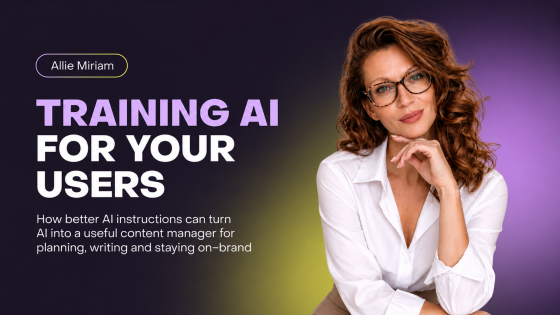
Allie shows creators how better AI instructions can turn AI into a useful content manager for planning, writing and staying on-brand.
AI is only as useful as the information you give it.
That sounds simple.
But it is where many creators go wrong.
They open an AI tool, type a vague request, get a bland answer and then decide AI is not very good.
But often, the problem is not the AI.
The problem is the instruction.
Allie’s session, What You Tell AI Changes Everything, is one of the most practical sessions inside the Future of AI for Course Creators Summit 2026, because it deals with something every creator needs to understand.
AI does not know your business unless you teach it.
It does not automatically understand your audience.
It does not know your tone of voice.
It does not know your values, your offer, your teaching style, your boundaries or the way you want your brand to feel.
You have to give it that context.
When you do, AI can become much more than a quick writing tool.
It can start to act like a content manager for your creator business.
Quick answer: Allie on AI as Your Content Manager for Creators explains how to allie shows creators how better AI instructions can turn AI into a useful content manager for planning, writing and staying on-brand.
Why What You Tell AI Changes Everything
Most creators are not getting poor results from AI because they lack creativity.
They are getting poor results because they are giving AI weak input.
A vague prompt creates a vague response.
If you ask AI to “write a blog post about online courses”, it will probably give you something generic.
If you tell AI who your audience is, what they struggle with, what your offer solves, what tone to use, what examples to include and what phrases to avoid, the result becomes much more useful.
Think again if you believe the magic is in one perfect prompt.
The real power comes from context.
AI needs direction.
It needs your thinking.
It needs your point of view.
It needs your brand voice.
That is why Allie’s session matters so much for course creators, membership owners, coaches and digital business owners.
Because your content is not just content.
It is how people understand your expertise.
It is how they decide whether to trust you.
It is how they move from curious reader to subscriber, student, member or client.
AI Is Not a Mind Reader
AI can feel impressive, but it is not a mind reader.
It cannot automatically know what makes your business different.
It cannot guess the emotional state of your audience unless you explain it.
It cannot protect your voice unless you define it.
This is where many creators get frustrated.
They say, “AI does not sound like me.”
Of course it doesn’t.
Not yet.
You have not trained it.
You would not hire a real content manager, hand them one sentence and expect them to write perfectly in your brand voice forever.
You would brief them.
You would explain your audience.
You would share examples.
You would tell them what good looks like.
You would review their first drafts.
You would give feedback.
AI needs the same kind of guidance.
The more clearly you explain your business, the better it can support you.
This connects closely with David Newton’s session on AI workflow for creators, because using AI well starts with treating it as part of your workflow, not as a random one-off tool.
How AI Can Become a Content Manager for Creators
A content manager does not just write posts.
A good content manager helps organise ideas, plan campaigns, understand the audience, maintain brand voice, repurpose content and keep messaging consistent.
AI can support many of those jobs.
It can help you plan a month of content around your course launch.
It can turn a webinar into blog posts, emails and social captions.
It can help you create content themes for your membership.
It can review whether your messaging is clear.
It can help you turn student questions into helpful articles.
It can organise your ideas into pillars and clusters.
It can help you stay consistent when you feel busy, tired or overloaded.
That is a big deal for creators.
Because most course creators are not short of ideas.
They are short of structure.
You might have voice notes, rough drafts, old webinars, workshop slides, Q&A calls, live session recordings, student emails and random notes sitting everywhere.
AI can help you turn that scattered material into a usable content system.
Not perfect on its own.
But very useful when you guide it.
Why Course Creators Need a Content System
Random content is tiring.
It takes energy but does not always create results.
One week you post a tip.
The next week you share a story.
Then you send an email.
Then you forget to publish for two weeks because you are busy delivering your course.
That is normal.
But it makes growth harder.
Course creators need content that leads somewhere.
Your content should help people understand the problem you solve, trust your approach and see the value of your offer.
That means your AI content system should not just ask, “What can I post today?”
A better question is:
What does my audience need to understand before they are ready to buy, join or take action?
That question changes everything.
AI can help you map the journey.
For example, if you sell a course on building a coaching business, your audience might need content on choosing a niche, pricing, confidence, client attraction, sales calls, delivery and testimonials.
If you run a membership for artists, your audience might need content on creative habits, selling work, finding inspiration, building a portfolio and staying consistent.
If you teach course creation, your audience might need content on validation, lesson structure, launch planning, tech setup, student experience and marketing.
Suddenly, content is not random.
It has a job.
Training AI on Your Brand Voice
Your voice is one of your biggest assets.
It is the difference between content that sounds like you and content that could belong to anyone.
AI can help you write faster, but only if you protect your voice.
This starts with creating a simple voice profile.
You can tell AI:
who you write for
how formal or casual you want to sound
what words you use often
what phrases you avoid
what kind of examples you like
how you open and close content
what you believe about your industry
what tone feels wrong for your brand
This does not need to be complicated.
You can also give AI examples of your previous content and ask it to study the tone.
Then, when you ask for a blog, email or social post, you can tell it to follow that voice profile.
Remember, you are not asking AI to invent your personality.
You are asking it to support the one you already have.
This is also why Mike Samuels’ session on AI sales copy without losing your voice is so relevant. The same principle applies to content and sales copy: speed is useful, but trust comes from sounding real.
Better AI Prompts for Course Creators
A good AI prompt is not just a command.
It is a brief.
The better the brief, the better the result.
Instead of saying:
“Write an email about my course.”
You could say:
“Write a warm, practical email for course creators who feel overwhelmed by launching. The email should explain why they do not need to build the full course before validating the idea. Keep the tone conversational, clear and encouraging. Include one simple example and end with an invitation to join my free workshop.”
That is much stronger.
It gives AI the audience, emotional state, message, tone, example style and call to action.
This is simple to do.
But it requires you to slow down before you ask AI to speed up.
Keep your eyes open here.
The creators who get the best results from AI are not always the most technical.
They are the clearest communicators.
They know what they want.
They know who they serve.
They know what their audience needs to hear.
AI can help turn that clarity into content.
AI for Content Planning and Repurposing
One of the best ways creators can use AI is for repurposing.
Most creators already have more content than they realise.
A live webinar could become a blog post, email sequence, short video script, checklist, LinkedIn post, FAQ section and sales page section.
A coaching call could become a content theme.
A student question could become a useful article.
A workshop could become a lead magnet.
A podcast interview could become a series of educational posts.
AI can help you do this faster.
But the key is to give it a clear purpose.
Do not just ask AI to “repurpose this”.
Tell it who the content is for, where it will be published and what the reader should do next.
For example:
“Turn this webinar transcript into three blog post ideas for course creators who want to use AI without losing their voice. Each idea should answer a specific search question and link naturally to my main course creation offer.”
That is how AI becomes part of your marketing system.
Not just a content spinner.
A useful planning assistant.
AI Content and SEO Work Better Together
AI content planning becomes even stronger when it is connected to SEO.
This is where Allie’s session connects naturally with Neil Patel’s keynote on AI SEO for course creators.
If your AI content system is only helping you post more, it is missing the bigger opportunity.
Your content should help people find you.
That means it should answer real questions, use natural keywords, include clear headings and connect related topics through internal links.
AI can help you create topic clusters around your expertise.
For example, a pillar article might cover “AI for course creators”. Supporting articles could then cover AI prompts, AI for sales copy, AI inside memberships, AI for course planning, AI for SEO and AI for daily workflows.
This gives your content structure.
It also helps readers move through your ideas in a natural way.
For AI Search, this matters.
Content that is clear, connected and useful is easier to understand.
For humans, it matters too.
Nobody wants to dig through a messy website trying to work out what you do.
Using AI Without Creating Bland Content
There is a risk with AI content.
If you let it lead too much, your content can become bland.
It may sound clean, but not memorable.
It may be grammatically correct, but not persuasive.
It may answer the topic, but not feel like you.
That is why Allie’s message is so important.
What you tell AI changes everything.
If you feed it generic instructions, it gives you generic content.
If you feed it your voice, your audience insight, your examples and your point of view, it becomes much more useful.
Creators should review every AI draft with a simple question:
Would I actually say this?
If the answer is no, change it.
Add a story.
Add a sharper opinion.
Add a real example.
Cut the fluff.
Make the language sound like a person.
AI can get you started.
You still need to make it worth reading.
What to Include in Your AI Content Manager Brief
If you want AI to act more like a content manager, give it a proper brief.
This brief can become something you reuse again and again.
It should include your audience, your offer, your tone, your content goals, your key topics, your common calls to action and your rules.
For example, you might tell AI:
“My audience is course creators, membership owners and coaches who want practical ways to grow their digital business. My tone is conversational, clear and supportive. Avoid hype, jargon and generic AI phrases. My content should help people understand online course growth, AI, marketing, memberships and student experience. Always include practical examples and keep the writing human.”
That kind of direction gives AI a much better starting point.
You can also include internal links, preferred keywords and your main offers.
Over time, this becomes a useful content operating system.
Not because AI replaces your thinking.
Because it helps organise it.
Why Allie’s Session Matters for Digital Business Owners
Allie’s session is valuable because it makes AI feel practical.
It brings the conversation away from tools and towards instruction.
That is important.
Because many creators keep looking for the perfect AI tool when the real issue is how they are using the tool they already have.
Better inputs create better outputs.
Better context creates better content.
Better systems create more consistency.
For digital business owners, this can save a lot of time.
Instead of starting from scratch every week, you can use AI to help organise your content plan, maintain your brand voice and repurpose your best ideas.
That creates more breathing room.
And when you have more breathing room, you can focus on the parts of the business that need you most.
Teaching.
Connecting.
Creating offers.
Supporting students.
Making decisions.
FAQs About AI as a Content Manager
What does it mean to use AI as a content manager?
Using AI as a content manager means using AI to help plan, organise, draft, repurpose and manage content across your business. It can support blogs, emails, social posts, launch content, course materials and content strategy when given the right context.
Why do AI prompts matter so much?
AI prompts matter because they shape the quality of the output. A vague prompt usually creates generic content. A clear prompt with audience details, tone, purpose, examples and goals produces much stronger results.
Can AI write in my brand voice?
Yes, AI can support your brand voice if you train it properly. You need to give it examples of your writing, explain your tone, define what to avoid and review the output carefully. AI does not automatically know your voice unless you teach it.
How can course creators use AI for content planning?
Course creators can use AI to map content themes, plan launch content, repurpose webinars, create blog outlines, organise student questions and build topic clusters around their course or membership offer.
Will AI make my content sound generic?
AI can make your content sound generic if you use weak prompts or accept the first draft without editing. To avoid this, add your own examples, opinions, stories, phrases and teaching style.
Is AI useful for SEO content?
Yes. AI can help with SEO content by suggesting topics, headings, FAQs, related keywords, meta descriptions and internal links. However, the final content should still include human expertise, examples and judgement.
Final Thoughts
Allie’s session, What You Tell AI Changes Everything, is a must-watch for creators who want better results from AI.
Because the issue is not just which tool you use.
It is what you tell it.
AI can become a useful content manager for your business when you give it clear instructions, strong context and a defined brand voice.
It can help you plan, write, repurpose and organise your content with less friction.
But it still needs you.
Your voice.
Your judgement.
Your examples.
Your point of view.
That is where the best content comes from.
Join the Future of AI for Course Creators Summit 2026 to learn how Allie and other expert speakers are helping creators use AI in practical, human and business-focused ways.
Want to build, sell and grow your online courses, memberships and communities from one place?
Try Zenler Risk Free for 30 Days and unlock the Accelerator Program that guides you step by step toward success.
https://www.newzenler.com/register
Related marketing and funnel resources
Build a stronger creator marketing system with these connected Zenler resources:
- Complete course funnel guide for New Zenler
- Lead magnet ideas for course creators
- Online course SEO topic clusters
Categories: : AI for Course Creators
Copyright © 2026 Zenler. All rights reserved.
Terms | Privacy Policy | Cookie Policy | Support